
"A Superlative Mother"
The psychic osmosis of Aurelia and Sylvia Plath


Welcome to A Narrative of their Own, a weekly publication exploring the lives and literature of women.
If you enjoy reading essays on literature, as well as reviews of great books and recommended reading, please consider a free or paid subscription.
This essay forms part of a series I’ve been working on, looking at literary mothers and mothers in literature. I’ve long been interested in mother-daughter relationships, and the ways in which the maternal bond might both strengthen and suppress the urge to write, leading me to ask the question: Who were the mothers behind our most admired literary women?
In these longform essays, I delve deeper into the lives and influence of the mothers who raised some of our most cherished literary women, exploring their own lives and their impact on their daughters’ work. Through curiosity and exploration of the mothers who raised them, these longform essays reveal the pleasure, the pain, and the importance of the mother-daughter relationship, as well as the books and characters they inspired.
Aurelia Plath was born in Boston, Massachusetts, to Austrian born parents Franz (Frank) and Aurelia Grünwald (Greenwood) Schober in 1906. Aurelia Frances Schober’s family still spoke some German within the family home, causing anti-German bullying at the outbreak of WWII. Nevertheless, she remained an excellent student.
A diligent reader enjoying many of the classics, Aurelia favoured the poetry of Emily Dickinson. She was also a fan of Louisa May Alcott and owned an annotated copy of Little Women gifted by a descendent of the Alcott family. She adored literature and harboured dreams of becoming a writer. She wanted to teach, although as she states in Letters Home, she never questioned her father’s decision that she instead study to become a “business woman.”
In Aurelia’s junior year of college, she worked for a professor at MIT, assisting with a German manuscript, exploring soil mechanics. Working late, she accompanied the professor to dinner afterwards, where she would come away with notebooks filled with recommended reading lists. She claims this affected her whole outlook. Realising her own life had been limiting, she dreamt of the education she could lead her own future children towards.
It was in 1929, when she returned to Boston university to study for an MA in English and German after a year of teaching high school, that she first studied with her future husband, Otto Plath. Aurelia had met Otto previously, at the German club meetings she was a part of, and now learned that he was to deliver the German course she was to study.
Otto, who as well as German taught courses in entomology, specialising in bumblebees, was twenty-one years Aurelia’s senior. Throughout the semester, though finding the younger Aurelia attractive and dignified, he had kept his feelings to himself. Despite being forty-five, almost twice Aurelia’s age, she had also admired her tall, stoic professor.
On the last day of the semester, in 1930, Aurelia was surprised when Otto invited her to attend an end-of-year weekend celebration at a colleague’s home. Whilst confessing his attraction to her, he also confessed that he had an estranged wife of thirteen years.
Nonetheless, Aurelia accompanied Otto that weekend, following which she informed him of her summer plans to work in New York. Thus began their “voluminous correspondence” until her return in the fall.
Aurelia speaks of the courtship that followed her return to Boston in September, when the couple began dating, enjoying hiking and discussing subjects of interest, such as ornithology and entomology. Taking a faculty post at Brookline High School, the couple began discussing future projects which would involve the study of nature, travel and writing. Aurelia also shared her own interest in literature with Otto.
After establishing a firm romantic relationship, on 4th January 1932, Aurelia and Otto travelled to Nevada with Aurelia’s mother, where Otto finalised his divorce and the couple were married.
Honeymooning in Nevada, Otto insisted that on their return to Boston, Aurelia resigned from her teaching post. Whilst she states in Letters Home that she enjoyed her teaching role at Brookline High School, she also confesses that she:
“yielded to her husband’s wishes and became a full time homemaker.”
Aurelia says Otto was keen for their first child to be a girl, claiming, “little girls are usually more affectionate.” On October 27th 1932, he got his wish: Aurelia gave birth to their daughter, whom they named Sylvia.
Immediately following his daughter’s birth, Otto announced to his wife his expectation of a son to follow two and half years’ later.
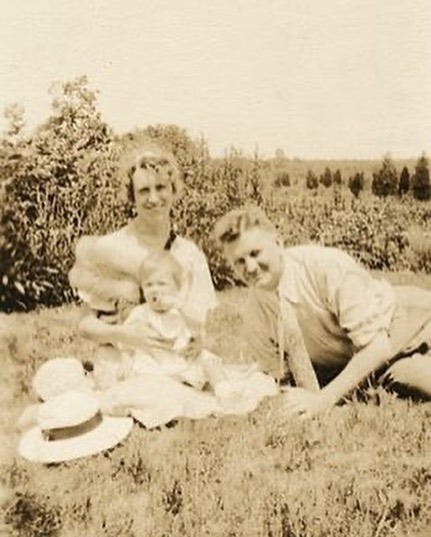
Aurelia claims that Otto enjoyed interacting with his baby daughter both as father and scientist, observing her closely, whilst she herself nursed Sylvia following her own mothering instincts. The baby appeared to thrive, attempting to make speech-like sounds at just six to eight weeks of age.
Aurelia also became involved in assisting Otto with the writing of his dissertation, The Life and History of Bees. On final publication, Otto mentioned that his wife had ‘aided’ in the editing and proofreading; no mention was given to the substantial writing involved which had been undertaken by Aurelia.
For his next work, a critically acclaimed article entitled ‘Insect Societies’ for a prestigious anthology, he once again turned to Aurelia, the new mother, to read and take notes for him on a mountain of preliminary texts. Aurelia produced a first rough draft of the manuscript for her husband, as well as editing and polishing the final published article. In the introduction to Letters Home, Aurelia says, somewhat cheerfully:
“By this time I felt I had had an intensive and fascinating course in entomology.”
She does betray her facade a little when suggesting the hopes she held in the early days of her marriage of a lively “open house,” saying they had practically “nil” in the way of a social life, although she adds that her family was made welcome. Frank and Aurelia Schober remained close, living with the family during the summer months, when they rented out their ocean home.
Unfortunately, Aurelia soon came to recognise that Otto, an established bachelor since his separation many years before, was set in his ways. He didn’t care much for social interaction, nor other people’s feelings or wishes, preferring to work hard and spend much of his time alone. He controlled every aspect of the couple’s life, and did not respond well to Aurelia crossing the strict boundaries he set. If she invited other people over to supper, this would anger him, meaning the meal must be finished before his return home from his day’s teaching, with Aurelia painstakingly making careful diagrams of her husband’s books and papers to ensure that they were replaced in exactly the same order on the dining table as before.
Aurelia explains this dominance in Letters Home as being down to her husband’s upbringing, as well as the age difference, their former professor/student relationship status, and his “superior education.”
For Aurelia, coming from a family of communicative parents who worked together, this must have been difficult. She appears to have accepted the situation with grace, however, stating that by the end of her first year of marriage:
“I realised that if I wanted a peaceful home - and I did - I would simply have to become more submissive, although it was not my nature to be so.”
Following the publication of ‘Insect Societies’, Aurelia discovered she was once again pregnant with the couple’s second child. She speaks of Sylvia’s excitement at the thought of the impending arrival of her sibling, hoping for a little sister. On 27th April 1935, Aurelia gave birth to a baby boy, naming him Warren.
Sylvia found it difficult when her mother nursed the new baby, as many small children do. Aurelia solved this issue by teaching her letters from a newspaper spread out on the floor as she fed her newborn son. She claims this resulted in her daughter, at the age of two and nine months, pointing to a stop sign and reading it backwards as “P-O-T-S.”
In the introduction to Letters Home, Aurelia painstakingly reiterates the way she raised her children and her wish to be a good wife and mother. A keen reader, she read books around parenting, accepting nevertheless the more old-fashioned ways in which Otto had preferred his children to be raised. She insists that:
“Both my babies were rocked, cuddled, sung to, recited to, and picked up when they cried.”
In all the fugue of early motherhood to two babies and assisting in Otto’s writing, Aurelia lost her drive to write fiction, something that had long been her dream.
The family began looking for a larger house for their growing family, and, visiting the beach at Point Shirley regularly where her parents owned a home, Aurelia eventually persuaded Otto to move close by. The family purchased a house in the ocean town of Winthrop, Massachusetts.
Aurelia quickly became firm friends with a neighbour who had children around the same age as Sylvia and Warren. When her new friend confirmed that she had enrolled her son, aged five, in a local private elementary school for the fall intake, Aurelia considered whether to also enrol Sylvia, despite her only being four years of age. As she had already been teaching Sylvia to read, she decided that her daughter was ready to learn.
The young Sylvia came home every lunchtime filled with enthusiasm for learning. She was soon enrolled in public school and would continue to show an aptitude for study. At the age of just five years, she was already completing whole poems, having her first published in the Boston Herald at the age of eight.
It was between 1938 and 1939 that Aurelia began to notice her husband’s deteriorating health. He had lost weight and wasn’t eating; he grew pale and struggled with climbing the stairs, complaining of respiratory symptoms. Otto refused to see a doctor after his work colleague had died of lung cancer; at the time, a cancer diagnosis, regardless of whether surgery was able to be performed or not, often meant a death sentence. It appeared that Otto had decided that he had similar symptoms to his colleague and that if his own death was imminent, he wished for it to come as swiftly as possible.
Whilst Aurelia was happy to see the pleasure of her children following their move to Winthrop, she nonetheless suffered from seeing her once powerful husband deteriorating before her eyes. She was forced by his frightening, painful leg cramps and her children’s noisy, childish games to keep them apart at home. She employed a local girl to help, whilst she spent time on preparing his lecture notes, correcting student work and dealing with his correspondence.
It was around this time that Aurelia began inventing stories for her children, based on her young son’s favourite teddy bear, “The adventures of Mixie Blackshort.” Converting the largest bedroom of their home into a playroom, the three of them enjoyed nightly instalments, even taking their suppers there, away from their weary and fading father. Before bed, they would spend half an hour downstairs with both parents, Sylvia often playing piano.
Warren suffered from many allergies as a young child, including foods, pollen and dust. In 1938-39, he had two serious bouts of bronchial pneumonia and started having asthma attacks. Aurelia began spreading herself thin looking after both her son and her husband. Sending Sylvia to stay with her grandparents during some of her brother’s illnesses, Aurelia claims this was when her daughter began to assimilate both father and grandfather - “Grampy” - even using the two interchangeably in her stories, mistakenly attributing the pleasurable swimming sessions at the beach she shared with her grandfather as something she did with her father.
The young Sylvia adored her grandparents, often spending weeks at their home close by. She later wrote ‘Ocean 1212-W’, a prose piece based around her grandparents’ telephone number. Her grandfather taught her to swim and took her on beach walks where he would explain the Latin names of the plants and animals. From this early introduction, she developed a lifelong infatuation with the ocean and sea creatures, which fed into her later work.
It was on Otto’s return from teaching summer school one afternoon that Aurelia noticed that his toe, which he had stubbed earlier in the day, had resulted in black and red streaks up his ankle. She insisted this time on calling the doctor, who instructed Otto to remain in bed, foot elevated, while he ran blood and urine samples. An advanced case of diabetes mellitus was quickly diagnosed.
A shocked Aurelia nevertheless began to see a ray of hope: with insulin and dietary changes, this was an illness he could live with, if only they were granted the time to get it under control.
A nurse was hired for Otto at home, and Sylvia, dressed in one of her cut down uniforms, acted as assistant and brought her father fruit and cool drinks, together with drawings she made for him.
Due to the delay in diagnosis, however, there were little treatable options left to Otto and his physicians. He attempted a radical rethink of his diet and lifestyle, as well as commencing insulin in large quantities, but within a couple of weeks had contracted pneumonia.
Otto’s complications led to him requiring an amputation of his leg from the knee down, due to gangrene. In her introduction to Letters Home, Aurelia is achingly keen to emphasise the lectures she attended, advising her how to care for diabetics, as well as the importance of helping her husband to feel a “whole man” following his amputation. Otto, meanwhile, avoided discussion of a return home and refused to try the prosthesis provided to him.
Whilst still in hospital, Otto deteriorated further, and sadly died on the 5th November 1940, a week and a half after Sylvia’s eighth birthday. An embolus had struck his lung, causing his death as he slept. Aurelia had only just left the hospital, reaching home as the telephone rang to give her the news.
Aurelia took the decision to wait until the morning to break the devastating news to the children. Attending their bedrooms early the next day, she spoke to her son Warren first, upon which the boy flung his arms around his mother and stated:
“I’m so glad you are young and healthy.”
On telling Sylvia the news of her father’s death, Aurelia reported that her daughter had looked at her sternly, advising that she would “never speak to God again,” and hiding under her blanket. She did however inform her mother that she wished to still attend school that day.
It is clear from Aurelia that although she sympathised with her husband and had cared for him up to his death, she nonetheless saw that he had sealed his own fate and that none of this needed to have happened. She even recalls the renowned diabetes surgeon sent to assess Otto’s leg, Dr Harvey Loder, remarking:
“How could such a brilliant man be so stupid.”
On Sylvia’s return home from school the day after her father’s death, she presented her mother with a “contract” to sign after receiving “troubling comments” from school friends in response to a discussion on step-fathers. Despite Aurelia’s relatively youthful age, she had quickly and willingly signed the contract stating that she would never remarry. Aurelia later justified this, saying she would only have remarried years into the future if she found a man she respected and loved and trusted to be a good father to her children, and whom they themselves wanted to have as their father.
She used this as evidence to reassure the troubled adult Sylvia who, as a college student, relayed the story of a friend’s widowed mother remarrying and worried she had kept Aurelia from this prospect.
In his book Sylvia Plath: The Wound and the Curse of Words, Steven Gould Axelrod suggests that Aurelia’s decision to keep the young siblings from attending their father’s funeral to be:
“an automatic attempt to intellectualise crises and to repress negative feelings such as grief, fear, anger, and shame.”
In Letters Home, Aurelia attempts to answer for her decisions around her late husband’s funeral, stating that, on visiting her husband in the funeral parlour, he bore no resemblance to her children’s father, appearing as a manikin-like body. She recognised that her daughter later took this as an act of indifference on the part of her mother, whilst she herself claims this to have been intended as an exercise in courage for the sake of her children. Sylvia later claimed that Aurelia never had time to mourn her father’s death.
Quoting poet Adrienne Rich, who referred to Aurelia as “a remarkable woman, a true survivor,” one who “worked tirelessly” for her children, despite a “painful and demeaning life”, Axelrod goes on to suggest that Aurelia’s decisions put a terrible toll on her daughter, with Sylvia learning to sublimate her feelings in a quest for achievement.
A week following Otto’s death, both Sylvia and Warren came down with measles, with Warren’s leading to pneumonia and Sylvia developing sinusitis, as well as Aurelia’s father losing his job and being diagnosed with a serious eye condition. Despite these hardships, the whole family, including Aurelia’s siblings, came together to attempt to make a joyous Christmas for the children.
Aurelia now knew she needed to become the breadwinner for her young family. Obtaining a job through a friend as a substitute teacher at Braintree High School, she began earning a salary of just $25 a week, teaching German and Spanish. This meant leaving home at 5:30 am to commute to Jamaica Plain. She did however secure a permanent role at the junior high school in Winthrop for the following September.
In 1942, a new opportunity presented itself for Aurelia when she was invited to develop the medical secretarial course at Boston University College of Practical Arts and Letters. She took a leap of faith with the role, as the salary didn’t increase from the initial $1,800 a year she started on until three years later, and didn’t include benefits for these first three years.
Aurelia was intending to make the course as interesting as possible for students, consulting with her sister-in-law’s husband who was a medical doctor. She threw herself into this new role, taking courses at Harvard evening school in biology and medical secretarial skills, as well as reading medical journals.
She also decided that it was better for her two children’s health, primarily Warren’s allergies, to move them from their ocean home, sensing that the middle-class area of Wellesley would be a better place to raise her family. This had the added benefit of Sylvia’s eligibility to apply for a full scholarship to attend the local college.
The day before Sylvia’s tenth birthday, Aurelia purchased a small, six-room white frame house in Wellesley. She reported that Sylvia wrote forty book reports that year, for her own enjoyment, was an enthusiastic girl scout and continued with her piano lessons.
A keen diary keeper, even then, Sylvia received a diary each Christmas from her mother. In 1945, she requested her mother begin gifting her undated journals instead, as one page was not enough for recording the big moments in her life. A sense of melancholy occurs here in Aurelia’s description:
“These were the days when we still were together enough to enjoy long talks about books, music, paintings—how they made us feel.”
She speaks of their joint love of words and how they contributed to a means of mutual understanding.
As her young daughter became an adolescent, Aurelia says she avoided referring to previous voluntary confidences on the part of Sylvia. She recognised their closeness could both be a comfort and an unwelcome invasion of privacy.
Sylvia famously derided her mother by utilising close observations of their relationship through her semi-autobiographical novel The Bell Jar, something which Aurelia went on to call “cruel” on its U.S. posthumous publication. Within the novel, protagonist Esther Greenwood rails against her mother’s controlling and perfectionist behaviour towards her through her ongoing therapy with a young and forward thinking psychiatrist, Dr Nolan. Dr Nolan was closely based on Sylvia’s real-life relationship with Dr Ruth Barnhouse, a young female psychiatrist with whom she underwent psychotherapy during her stay in McLean Hospital in 1953 following her first suicide attempt.
Sylvia was also critical of her mother within her prolific and meticulously written journals, as well as telling friends that her mother was a ‘martyr’, who gave away her autonomy first to her own father, then to her husband, and finally, to her two children. Some of Sylvia’s poetry has also been attributed to her complex emotions around her mother and their relationship, including ‘Medusa:’
‘In any cast, you are always there,
Tremulous breath at the end of my line,
Curve of water upleaping
To my water rod, dazzling and grateful,
Touching and sucking.’
Sylvia openly felt shame amongst her smart college friends, making unkind comments towards her mother with regards to her second-hand or tatty clothing as compared to the other girls’ mothers.
But Letters Home also features many examples of Plath referencing her mother in loving tones, claiming that should she have children of her own in future, she would wish to parent them just as Aurelia had done, as well as gushing references, telling her what a ‘superlative mother’ she had been.
“When I am a mother I want to bring up my children just as you have us…”
As we sadly know, Sylvia struggled throughout her life with her mental health, including one suicide attempt in 1953 at the age of twenty, after returning from a gruelling month-long guest editorship at Mademoiselle magazine.
The mother/daughter relationship Aurelia and Sylvia shared must have been something confusing on both sides: closer than close, due to the lack of a father and husband within the household, and with both women having shared passions of literature and art, they also struggled to gain enough emotional distance, with Aurelia herself referring to the “psychic osmosis” she often felt in her daughter’s company. It feels clear from Sylvia’s writing through her journals, poetry and her single novel that this closeness was also suffocating for her as a young woman, and that she felt the constant need to mask these feelings, in order to please the woman who had given her so much.
Sylvia was an exemplary student at Wellesley. An overachiever, she brought home perfect report cards, won prestigious scholarships and confessed to her brother Warren that she only told Aurelia the best parts of her experiences; the ones she wished for her mother to know. In one such confession, Sylvia stated that she felt she must always give her mother the edited highlights of her life, showing a young woman eager to please the mother who had sacrificed all for her children, whilst her resentment bubbled beneath the surface.
In a letter dated 27th August 1962, Sylvia confessed to her mother that she had both lost weight and suffered failing health over the past six months, despite a letter just two months earlier informing Aurelia that she had never felt so happy or well.
It appears that old habits died hard, and Sylvia was continually keeping up a sunny appearance for her mother’s sake. She likely felt guilt at the financial support she received from both Aurelia and her patron, Olive Prouty, enabling her to attend the more prestigious Smith college, where she did not receive a full scholarship. To meet the partial scholarship costs, Aurelia took on extra work, later cashing in an insurance policy to cover the tuition fees when her daughter returned to college following her suicide attempt.
It appears that Sylvia confided in her mother less after her first breakdown and her continued psychotherapy with Dr Ruth Barnhouse. Resuming her correspondence briefly whilst studying at Cambridge, during 1955-57, as she was unable to meet with Ruth, this again deteriorated once she returned to the states in 1957. Resuming her meetings with her psychiatrist, she once again loosened her ties with her mother. It was possible that Sylvia, always close to her grandmother whom she saw as a second mother, turned to her psychiatrist following her grandmother’s death, looking for a second surrogate, and using their sessions to release her hostility towards Aurelia.
Sylvia’s former roommate in her final year at Smith, Nancy Hunter-Steiner, iterates Sylvia’s tendency to fear desertion; a neediness that the young Nancy found stifling and manipulative. Sylvia maintained her correspondence with her former psychiatrist throughout the rest of her life.
Though used to putting on a brace face in her letters to her mother, during the breakdown of her marriage to Ted Hughes, there is some evidence to show that Sylvia was prepared to retaliate towards what she saw as her mother’s control.
Reacting to Aurelia’s advice to not express her anguish in her poetry, Sylvia writes:
“Now stop trying to get me to write about decent courageous people - read Ladies Home Journal for these!...I believe in going through and facing the worst, not hiding from it.”
This shows a more rebellious side to Sylvia than I think we imagine from her earlier letters.
Aurelia received some criticism for correcting her daughter’s work even after her death, in her editing of Letters Home. In her Introduction to the last fifty pages, she appears to distance any of the people in Sylvia’s life from her daughter’s eventual suicide. She claims that her daughter had much support from family and friends and hopes of a reconciliation with her husband, which appeared to be wishful thinking on the part of Aurelia.
She also uses this space to denigrate The Bell Jar, a book she clearly disapproved of, being as it was so autobiographical. Clearly, Sylvia had anticipated this, leading her to publish the book under the pseudonym Victoria Lucas, and to initially publish it in the U.K.
An interesting revelation in Letters Home is the letter Aurelia kept, sent to her by Otto’s youngest sister following Sylvia’s attempted suicide in 1953.
In the letter, she is informed that depression runs in the family, with Otto’s mother, another sister, and a niece all suffering with it. Aurelia took the decision to keep this information from her daughter. Whilst she later claimed that she did not wish Sylvia to use it to blame her father’s memory and to connect her earlier breakdown with his background, it could be that such information may have in fact been helpful for the young Sylvia in her understanding of her own suffering.
On attempting to reconcile the true nature of the mother-daughter dynamics between Aurelia and Sylvia, I find that there are more questions than answers.
Though it is without doubt that throughout Sylvia and Warren’s childhood, Aurelia had continued to work tirelessly in order to provide everything they wanted and she never had, such self-sacrifice didn’t go unnoticed, causing strain to both mother and children.
Sylvia and Aurelia appeared to have a problematic and rather ambiguous relationship. Although they were exceptionally close, evidenced through their published correspondence, Sylvia appeared to find both genuine joy in sharing her news with Aurelia, and to report to friends that she hated her mother. There is also the character of Mrs Greenwood in The Bell Jar, and the poems which appear to feature the two women’s complex relationship.
“...mentally, I dedicate this Harper’s triumph to you, my favourite person in the world.”
Whatever we think about Aurelia Plath’s choices and behaviours towards her daughter, it cannot be denied that Sylvia pushed herself academically and in all areas of her life at a punishing level. Whether this was because of a fear of her mother withdrawing her affection and praise, as suggested by critics such as Steven Axelrod, or whether it was just in her personality to do so, is unclear.
What interested me was to establish who the woman was who gave the genius poet life, the relationship she shared with her daughter, and the love of poetry and language which that relationship fostered.
It appears clear that Sylvia saw her mother’s life as one of martyrdom and subjugation. That Aurelia put her own authorial ambitions to one side to firstly please her own father, and then to please her husband–and then later continued to sublimate her own grief and needs in order to care for her children–appears to be something with which Sylvia took displeasure.
Although at first glance it appears an unusual reason for a child to find fault with a parent, if we examine these feelings further, it could explain Sylvia’s struggles to assert her own emotional needs within her marriage, as well as explain some of the punishing ways in which she demanded perfection from herself. Knowing that one’s mother has sublimated all her own desires is an uncompromising burden for a daughter to carry.
Bibliography
Alexander, Paul, Rough Magic, A Biography of Sylvia Plath, (Viking Penguin: USA, 1991).
Axelrod, Steven Gould, Sylvia Plath: The Wound and the Cure of Words, (Johns Hopkins University Press: USA, 1990).
Hayman, Ronald, The Death and Life of Sylvia Plath, (Heinemann: London, 1991).
Hunter-Steiner, Nancy, A Closer Look At Ariel: A Memory of Sylvia Plath, (Faber: London, 1973).
Plath, Sylvia, Letters Home (Faber: London, 1976), Selected and edited with commentary by Aurelia Schober Plath.
Plath, Sylvia, The Unabridged Journals of Sylvia Plath; ed. Karen V Kukil, (Knopf Doubleday: 2000).
Plath, Sylvia, The Bell Jar, (Faber & Faber: London, [1963], 2001).
Plath, Sylvia, ‘Medusa’, Ariel, (Faber & Faber: London: [1965], 2025).
Winder, Elizabeth, Pain, Parties, Work: Sylvia Plath in New York, Summer 1953, (Harper Collins: 2014).
This was so well done, Kate. You really captured such a complicated dynamic so well, and gave full breadth and depth to Aurelia, which is so rarely done. I can see both 'sides' - as a mother it gives me a shock of terror knowing how my own daughters could rail against me someday, whether in therapy or art! Our parents' decisions, though often well intentioned, can have enormous psychic consequences. You can see how with the 'convenience' of a 'colossal' dead parent in the form of Otto Plath, Sylvia came to see Aurelia as the punching bag for all her rage. I think it's also clear that there was an unclear path for normal rebellion available to Sylvia.. With such a suffocatingly close relationship and so much 'owed' to her mother I think the usual separation needed during adolescence was difficult to obtain. All that being said I truly do have enormous sympathy for Aurelia who I think comes off as mostly immensely confused by her brilliant and angry daughter. I do honestly think she loved her very much and did her best. But I also see Sylvia NEEDED to separate herself somehow! So much to think about here!
I only encountered Sylvia Plath in smatterings during my studies, but I found your study of the mother-daughter relationship fascinating. Mothers bear so much, fairly and unfairly. It's easy to relate to Aurelia's spirit and wish to give her children every opportunity to succeed. It's also easy to imagine that Sylvia had so many feelings she needed to process apart from her mother. What strikes me most though is the two camps---"let's talk about this and work through it" and "let's pretend none of this happened and keep marching." I find these two camps throughout my own family history. We each have the choice of how to manage the things that happen to us and because of us--I suspect I will always prefer cathartic venting as did Sylvia. Thanks for giving me much to think about--your study brings the issues to life and is sensitive to both sides.