
Short Story Salon
Doris Lessing


Welcome to A Narrative of their Own, a weekly publication exploring the lives and literature of women.
This essay forms part of my Short Story Salon feature. At the end of the essay, I will suggest some stories to read this month. Upgrade to a paid subscription below to join the end of month discussion thread and exclusive subscriber chat!
Doris Lessing was a British writer whose novels and short stories are largely concerned with people involved in the social and political upheavals of the twentieth century.
Born in Persia, Lessing’s family moved to a farm in Southern Rhodesia (now Zimbabwe), where she lived from age five until she returned to settle in England in 1949. As a young women, Lessing became an active communist.
Her first published novel, The Grass is Singing, was published in 1950 and tells the story of a white farmer and his wife and their African servant in Rhodesia.
Her other works including the five-novel series Children of Violence, again influenced by growing up in Southern Africa.
Seen as something of a feminist bible for the artistic woman, her novel The Golden Notebook appeared in 1962. In it, she explores a woman writer who attempts to come to terms with the life of her times through her art. It is a complex, moving novel, covering feminism, the life of the female artist, gender relationships and Communist politics.
Although perhaps less well known, Lessing’s short stories appear in many collections, including A Man and Two Women (1963), Winter in July (1966), and a collection of her African Stories (1964). Appearing in both A Man and Two Women and the later Doris Lessing: Stories is ‘To Room Nineteen’.
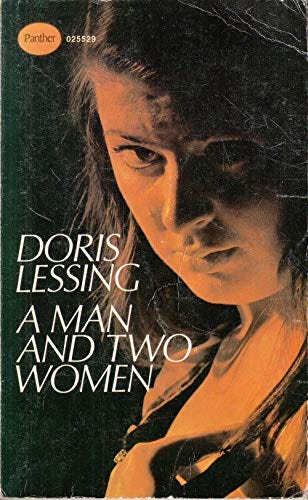
In ‘To Room Nineteen,’ Lessing develops some of the same themes as in The Golden Notebook, though the female protagonist is not a writer. She is one of hundreds of thousands of women who stopped work to raise a family in the 1960’s, only to find themselves lost and invisible amidst the detritus of family life.
Lessing was no stranger to the nuance involved in writing about women and motherhood.
In her memoir Under My Skin, Lessing details her decision in 1943, aged 23, to leave her unhappy marriage to Frank Wisdom, a civil servant with whom she had two children. She recalls sitting down on her suburban lawn with her two toddlers and explaining to them that she was leaving to fight racial and economic injustice. She did not admit that she was partly leaving them to enable her to write.
Lessing makes clear that she thought she was doing the right thing. She believed that mothers became inevitably frustrated when they were prevented from following their own desires, and that her children could become themselves without being mothered.
Her mothering was further complicated by a second brief marriage to a German Communist named Gottfried Lessing. This resulted in a son, Peter, who Lessing later chose to take with her when she returned to England.
She later wrote in her letters that she enjoyed motherhood, not wanting to be separated from them, however not wholly guilty at leaving them behind, either. She attempts to reconcile in writing her wish to retain an independent life whilst also being a mother.
Lessing clearly had a nuanced understanding of the conflict arising between work and motherhood to have covered it so often and succinctly, and reportedly stated that she felt she had no choice but to leave her first two children behind with her ex-husband in Southern Rhodesia (now Zimbabwe) when she moved to the UK, in order to focus on her writing.
‘For a long time I felt I had done a very brave thing. There is nothing more boring for an intelligent woman than to spend endless amounts of time with small children. I felt I wasn’t the best person to bring them up. I would have ended up an alcoholic or a frustrated intellectual like my mother.’
Awarded the Nobel Prize for Literature in 2007, only the eleventh woman and oldest person to do so at that time, the awarding Swedish Academy described her as: “that epicist of the female experience”.
This month, I am going to be re-reading Lessing’s fascinating and dark exploration of motherhood in ‘To Room Nineteen’ from her collection A Man and Two Women. This story also appears in Doris Lessing: Stories. I have found a few free stories below, if you don’t have a copy.
I hope you enjoy a foray into the world of Lessing and will be popping in and out of the chat throughout the month, with my reading of ‘To Room Nineteen’ appearing at the end of the month for my paid subscribers.
If you would like the full Salon experience, upgrade below to access all previous and future Salon posts, the exclusive subscriber chat, as well as all my other weekly essays.

What she did was really transgressive, and I don't quite know what to think about it. The Golden Notebook is the only Lessing I've read, and the stories sound very interesting, Kate.
I liked Lessing's short story "One Off the Short List," which, as I recall, made the BBC out to be a pretty terrible place to work. There is a horrible man involved, but the whole environment seemed pretty unpleasant. Her little tale, "Sunrise on the Veld", presents a beautiful environment with a sobering assessment about what can lie beneath beauty. And yet, Lessing does not seem cynical or disillusioned.