
Reading Reflections
Warning: Contains scenes of notebook nerdery 🤓


Welcome to A Narrative of their Own, a weekly publication exploring the lives and literature of women.
Occasionally, I take a brief break from essays exploring the themes of women’s literature and reflect on my own recent reading. Hopefully these essays will inspire your own discoveries ✨
If you enjoy reading essays on literature, as well as reviews of great books and recommended reading, please consider a free or paid subscription.
I recently picked up Katy Hessel’s book How to Live an Artful Life. In it, she sets out quotations from artists and goes on to make suggestions on how we can take their ideas forward into our daily lives.
The theme for July is “Freedom,” and this has been apt for a month in which I have felt re-connected to creativity.
In an attempt to shun screens and focus on the huge pile of reading I want to tackle, I wanted to try to find a therapeutic creative practice that wasn’t too intense, and didn’t need to be ‘good.’
I have made several discoveries this past month since embarking on both reading Hessel’s book and attempting to rediscover creativity from a new angle. I thought you might find the following ideas useful in your own journeys!
Choosing the right notebooks and implements
I always start a new project with a new notebook (stationery nerds unite!!) For my forays into creativity this month, I decided I wanted to try some tiny notebooks, ones that I could easily stash in a pocket or bag, and that I wouldn’t feel too precious about.
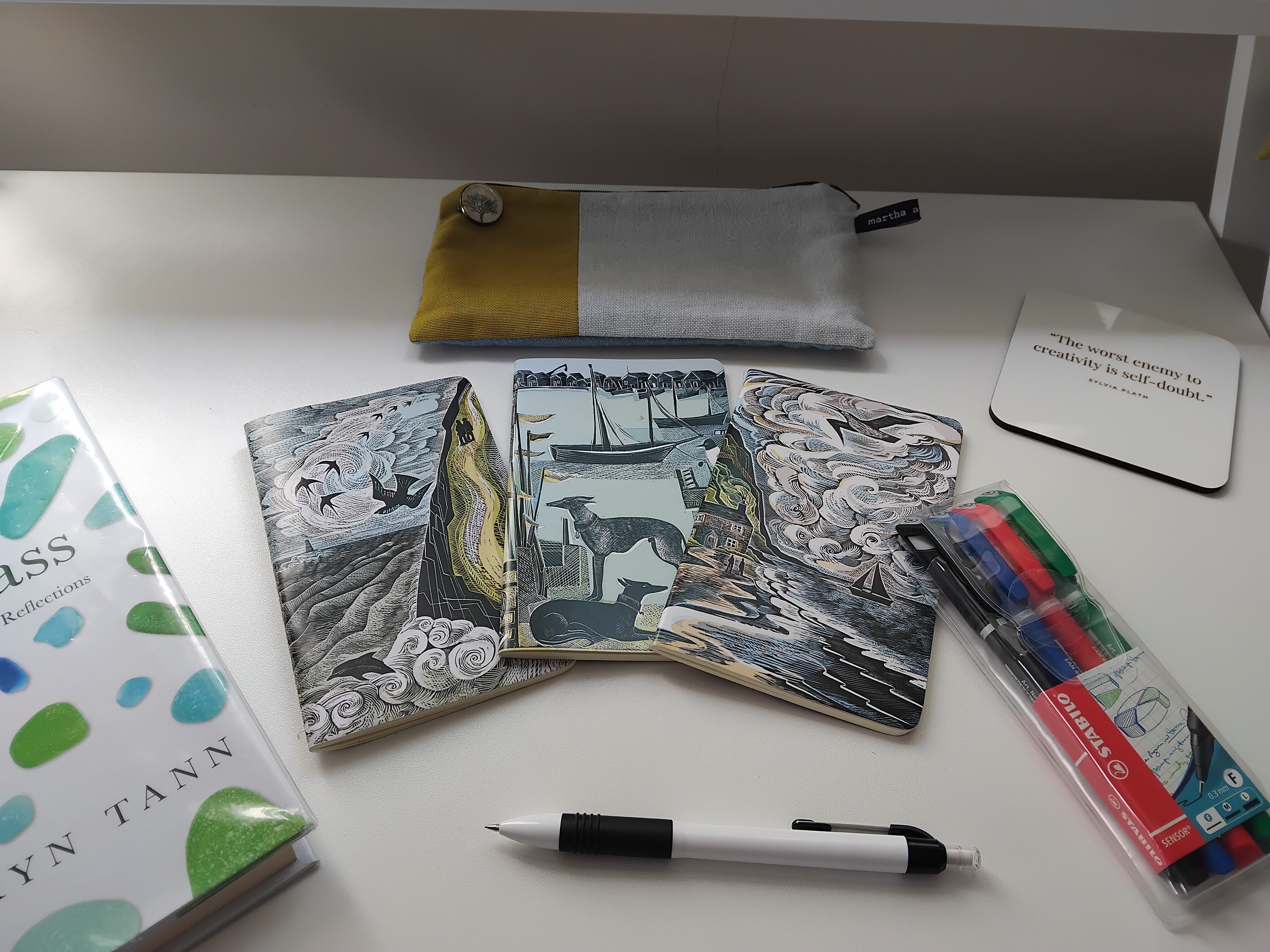
I plumped for these Angela Harding designed packs of three tiny notebooks, which had the added bonus of inspiring, nature-themed designs. These seemed perfect for days out over the summer, and have alternating lined and plain paper, to allow for sketching and doodling, should the urge arise. I am not a natural artist, so I decided to just go for a simple retractable pencil with rubber (my preferred writing implement, as I am such a messy writer), and a set of four Stabilo fineliners, which are just nice to play around with.
Inspiring Reading
Now to the important part! My reading this month has taken the form of novels and nonfiction, as well as poetry (unusual for me) and has been aided and abetted by the sheer amount of football that has been watched in my home (which I have been gloriously reading my way through) plus two heatwaves (ditto).
Poetry
Apart from the daily prompts from Hessel’s book, I decided to order a selection of poetry collections from the library. I wanted to ensure I always had a book with me, and many poetry books come in slim designs, ideal for slipping into a bag. I looked out for the recommendations of other writers on Substack, as well as seeking specifically nature-related poetry collections. I thought this was a chance to discover some new-to-me poets. So far, my favourite of these has been The Treehouse by Kathleen Jamie, which contains some beautiful lines of poetry about the natural world:
‘Neither born not gifted
crafted nor bequeathed
this forest dwelling’s little
but a warp or tease…’ — Kathleen Jamie, ‘The Bower’
I also loved her poem ‘The Brooch,’ which has inspired me to write a piece of life writing (something I used to do a lot of, and which I haven’t done in several years).
‘All I have is small enough
To be held in one hand —
An agate brooch. It’s pierced
Like an implement or tool,
perhaps a loom weight.
The agates are brindled,...’ — Kathleen Jamie, ‘The Brooch’
I now have the Louise Gluck collection, Averno, which I’m excited to dive into next!
Essays
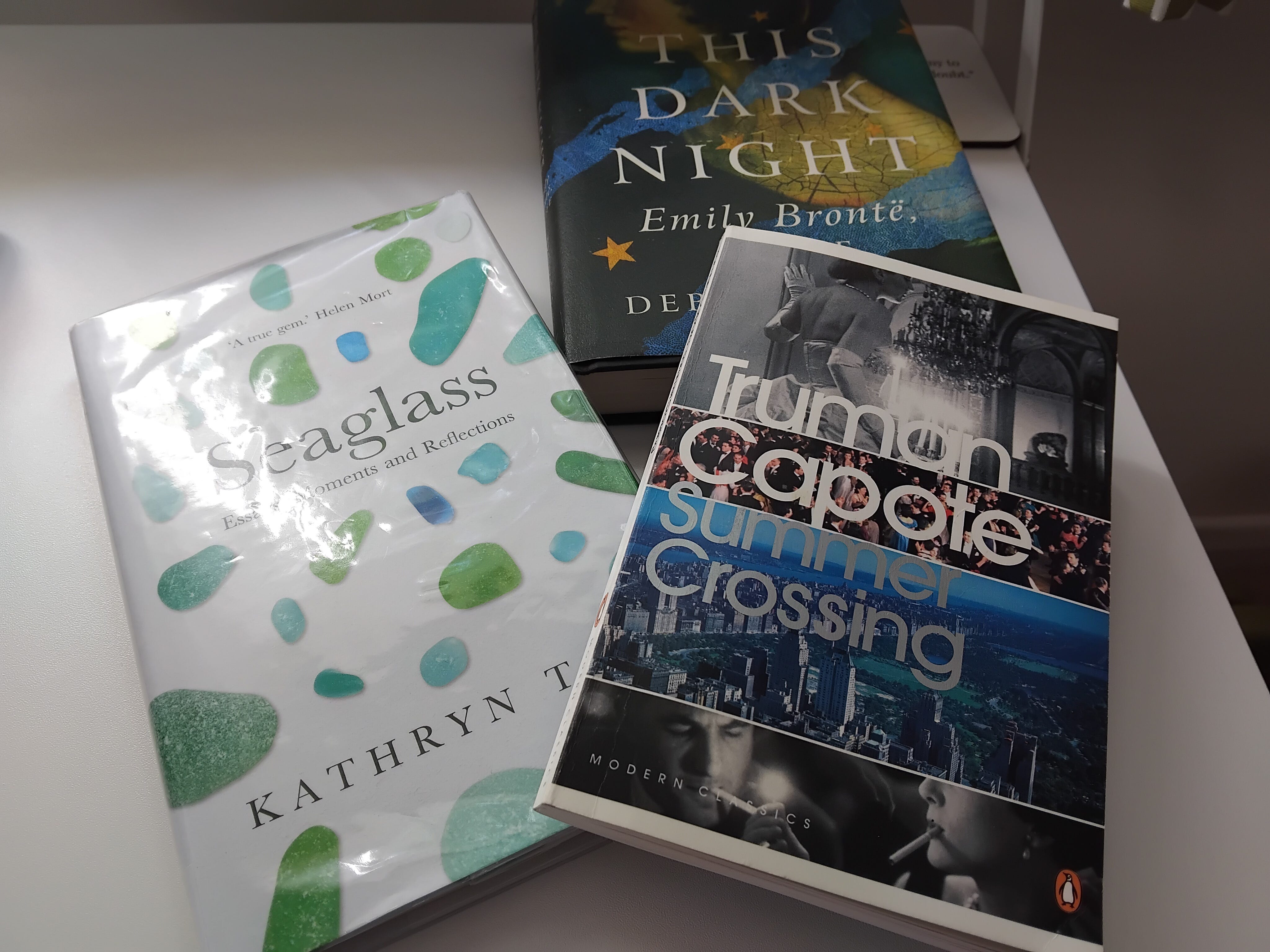
I am also a fan of nature essays, and have revisited Kathryn Tann’s Seaglass: Essays, Moments and Reflections this month. Tann writes lyrical essays around nature, swimming, and the habit of collecting seaglass from around the British isles, which she places in a jar on her windowsill.
‘And somewhere, pretty far along the line, I noticed that I have always been collecting: shells, fossils, photographs and half-finished notebooks. I am a library of things.’ — ‘On Collecting Seaglass,’ Kathryn Tann
The essays explore her lifelong love of being in and close to the water, the difficulties of growing into womanhood, and her attempts to find nature whilst cooped up in a Manchester apartment during lockdown. In her essay ‘Unmoored,’ my favourite from the collection, she writes a thought-provoking study of our lack of ability to simply sit in nature in silence, without the need to share or consume content.
‘I climb back into the car with a folder-full of photographs from the cliffs, but no lasting memory of how the air smelled, or which birds passed over my head.’ — ‘Unmoored,’ Kathryn Tann
I am finding her short essays are really inspiring me to keep notes on the nature I am seeing in my local area this summer.
Nonfiction
Throughout July, I have also been reading Deborah Lutz’s new biography of Emily Brontë, This Dark Night: Emily Bronte, A Life, which I can’t recommend enough. I have been boring everyone I meet about this book (including probably everyone on Notes!) But I have felt so inspired, both from the point of view of essay themes around the Brontë’s and their writing, to re-reading their novels and discovering more of Emily’s poetry, as well as her close connection to the natural world.
‘There are two trees in a lonely field
They breathe a spell to me.’ — undated fragment, Emily Brontë
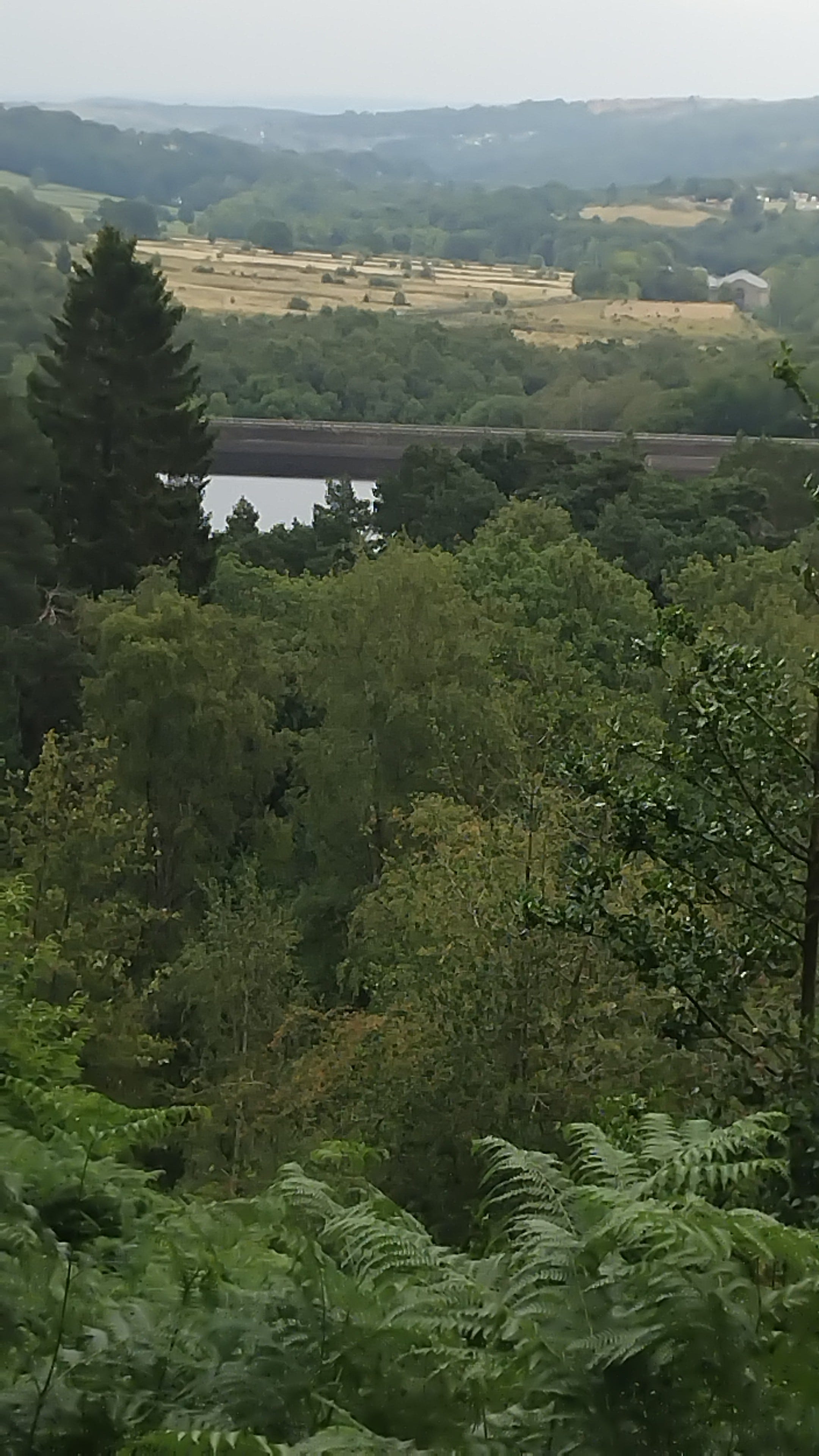
Coming from Yorkshire (though I am in the South, close to the Peak District National Park, as opposed to Emily’s West Yorkshire Moors), I have felt an urge to get outside and walk, explore, and write about it.
Novels
As well as Lauren Elkin ’s new translation of Simone de Beauvoir’s The Image of Her, which I wrote about earlier this month, I have also enjoyed reading The Ten Year Affair by Erin Somers. I had this on reserve at the library for months…so I am glad to say I thoroughly enjoyed reading it! I spent over three hours in the height of the heatwave one evening, sprawled by the open windows, just devouring it.
The Ten Year Affair tells an unusual story about two parents who meet at a baby group and begin a ten-year ‘friendship’ which leans towards an affair that might never happen, as both are married to other people. The female narrator indulges in alternative timelines in order to fulfil some of her fantasies. A fascinating concept, I thought, and the story felt very realistic, whilst also unique.
I then spent a couple of days racing through Truman Capote’s Summer Crossing, a posthumously published novel of Capote’s that I hadn’t come across before. My daughter loaned me this one, and it was perfect for reading in a heatwave! It features a young woman named Grady, which the blurb informs me could have been a precursor to Capote’s Holly Golightly of Breakfast at Tiffany’s.
After seeing her parents off for the summer, Grady welcomes the solitude of their New York apartment, engaging in a relationship with a car park attendant named Clyde. There is a sense that this cannot end well, but everyone is going to have a great time while it lasts!
‘Rising inside Grady was an ungovernable laughter, a joyous agitation which made the white summer stretching before her seem like an unrolling canvas on which she might draw those first rude pure strokes that are free.’ — Summer Crossing, Truman Capote
I am a fan of Capote’s writing, and this has some wonderful lines in it, so it was a highly enjoyable read! Ideal for fitting in a tote for summer adventures 🙂
Finally, I just read Mary Gaitskill’s novella This is Pleasure, which at just under 100 pages is readable in one sitting. Just, wow! I am new to Gaitskill’s writing, but this tiny book just blew me away. It features Quin and Margot (referred to as Q and M in the book), who have been friends for over twenty years. Quin has been sacked from his high-profile job in publishing following many complaints of his abusive behaviour towards women. Rejecting moral certainties and questioning friendship and loyality, the book explores, through Q and M’s alternating voices, gendered narratives post-#MeToo. Fascinating.
All of this reading steered me away from the screens and towards tactile notebook time, leading to the following discoveries:
Inventive ways to use a journal
Although I have always liked to scribble in notebooks, I have often struggled with the general idea of ‘journaling,’ and always rip up and throw away my notebooks after filling them. (I have a weird terror that they are going to be pored over and published when I’m gone…).
However, as I get older, it has occurred to me that it might be nice to have a collection of small, beautifully designed notebooks on my shelves, filled with the ideas and thoughts that have occupied my mind in a specific time and place. This has been partly inspired by Kathryn Tann’s Seaglass, as I love the way she writes short snippets of where she has been, the landscapes around her, and the connections to her life as a woman, both in the past and present.
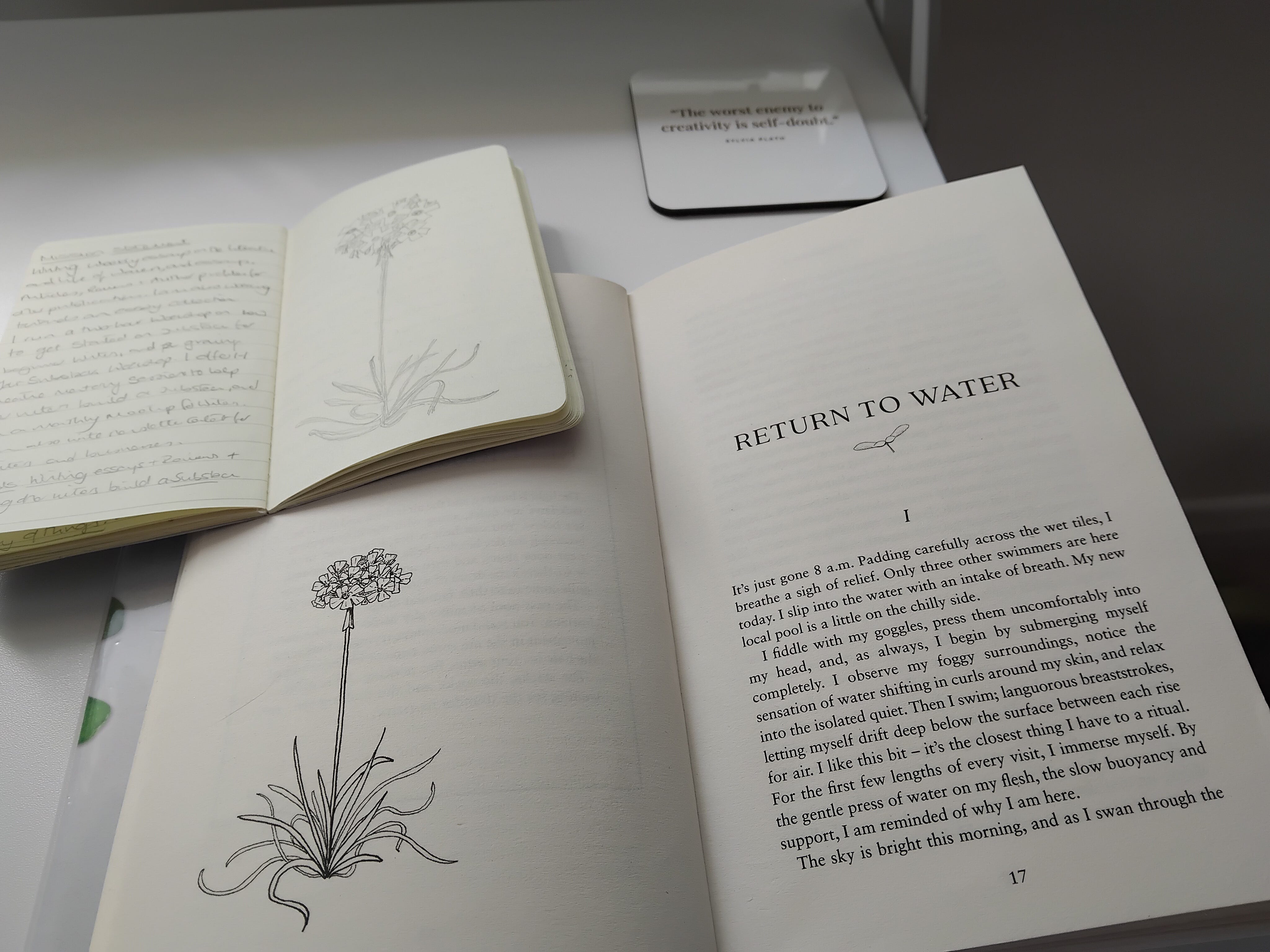
This month, I have been experimenting with how to use a notebook or journal in a different way. I was further inspired by researching Kate Chopin’s Writing Rituals, and how she was influenced by the journal she kept containing character sketches, literary critiques and poetry. This has informed my ideas around using my tiny notebooks this month: though I am not writing my own poetry, I am having ideas for other creative writing, as well as noting down words and lines of poetry that have inspired me, (basic) sketching, and noting my thoughts on my reading.
Another practice I am trying is keeping a ‘daily log,’ which is just a few lines of what has happened on a given day. The aim through these mundane reflections of my days is to recognise the gentle ebbs and flows of routine and rhythm in my life, rather than the longform journaling which I find often spills into complaining and negativity. As always, I am indebted to Petya K. Grady for the idea of the daily log (also known as a ‘Captains Log’) discussed in this post.
Trying to let go of perfectionism and the need to perform
Many of us struggle with perfectionism, and added to this now is the need for hobbies to become performative. As someone who chooses to share my writing online, it is tempting to think that any form of writing I do needs to be shared with the world. It doesn’t. Nobody is desperately waiting to read my reflections on my walk in the woods, or the vignette I was inspired to write after reading Kathleen Jamie’s ‘The Brooch’. Just writing or creating art for the sake of doing it needs to sometimes be enough.
It can also be easy to feel intimidated when starting a new notebook or project, with the idea that we might ‘ruin’ it by not being very good.
My kids used to have a notebook called ‘Wreck This Journal,’ which actually encouraged activities such as screwing up a page of the book or ripping off the edges of the page. I thought this was a genius idea! I actually attended a workshop a while ago where the facilitator suggested placing a coffee cup on your brand-new notebook, so that it was stained before you started writing in it. Anything you need to do to get over yourself about the creative process seems a good idea to me.
Staying curious
Initially thinking I might try to do a bit more art (not something I am very good at), I realised this month that sketching, painting, and more traditional art forms make me feel too intimidated. As writing and the written word is my thing, I’ve turned towards this, savouring words and connections, noting down lines of poetry or even single words that have spoken to me in some way, and adding tiny doodles or line-drawing flowers and plants with the Stabilo fine liners.
This has honestly been a lovely way to spend some warm July evenings, the windows thrown open to hear the evensong of local birds, and the radio set to calming classical music.
(Fun fact: I discovered this week that birdsong has been proven to lower anxiety and improve low mood in just six minute bursts - including listening to birdsong on a recording!)
Kathleen Jamie’s poem, ‘The Bower,’ my favourite in the collection, led me to look up the exact meaning of ‘bower,’ then doodle some very basic overhanging leaf patterns with my green fineliner.
Taking out the idea of sharing or publication of these notes and doodles meant that I could let go of the need for refinement, and just allow my pen to explore.
Although I primarily write literary analysis essays and author profiles these days, in my former life I used to write a lot of flash fiction and life writing. These were often inspired by the nature around me and my life as a mother of young children at the time. I began many of these pieces first in tiny notebooks I kept in my bag.
‘The dad and his two small daughters lean over the jellyfish on the edge of the rock pool. It hovers between sand and sea. Its purple core fades out to translucence. The foamy edges of the water lick at their bare toes.
Is it still alive? Jess, the youngest asks. The word ‘alive’ is whispered.’
(An extract from my piece ‘Jellyfish,’ which was selected as a finalist for ‘Best of the Net,’ and was inspired by a trip to the North Yorkshire coast with my family, as well as the grief of losing my mother).
Aspiration: Subscribe to print journals
My ideal would be to subscribe to more print journals, in an effort to set aside time to read these offline, but budgets don’t allow at the moment. In lieu of that, I subscribe to a couple of online creative writing journals, such as River Teeth, which runs a column every Monday called ‘Beautiful Things.’ These are 250 word micro essays, often on the natural world. I also love Brevity Magazine, which shares nonfiction essays of under 750 words.
Art trips and micro adventures
I have spoken before about my family’s love of the ‘micro adventure.’ These involve short trips without too much pressure or travel.
I plan to incorporate more of these over the coming months, with local writing festivals, art exhibitions, sculpture parks, and nature walks. Just getting outside recently into the cool shade of the woods close to my home has been an inspiration in itself, and walking in green spaces remains one of my favourite things to do, especially at this time of the year.
Writing down words and phrases from my reading this month made me realise that for me, creativity starts and ends with words. I will never be an ‘artist’ in the sense of painting or creating objects. But doodling in my notebooks alongside reflections on my reading is a creative practice in itself.
I hope you have enjoyed my reflections on a month of pursuing pleasure through art and reading, and it inspires you to pick up your book, sketchpad, or paintbrush over the summer months and beyond!
Please let me know in the comments of your own practises, or any hobbies you have recently discovered that are bringing you joy. In a time with so much darkness on our doorsteps, I am finding that reading, art, and nature really are the best tonics.
The extra post for paid subscribers of my Short Story Salon comes out on Wednesday (this month we’ve been reading Margaret Atwood’s Stone Mattress collection). If you’d like to join us for next month’s Salon, sign up below! : )
I do love buying notebooks and have one on the go for writing notes on each book I read. I keep another one for my travels as I can never remember in detail what I did, although my photos do help.
I love this post, Kate! Thanks for sharing your joy with us. It was such a pleasure to hear about your creative processes.
A few of my simple creative pleasures:
- FINALLY buying colored pencils and a sketch pad to draw in and actually drawing. I am awful at it but that isn't the point. I find it so therapeutic even if it's nothing I'd dare show a soul.
- journaling. I know it isn't for everyone but there is something special about writing something that's just for me, a place to dump my feelings and thoughts and look back at one day.
- writing my novel. I am making very slow progress because I've started it as a joy project, not something that I need to publish and make perfect (though I will feel this drive at some point). For now, it's just for pleasure and it's just for me, and I really do love that.
- writing letters and postcards! I LOVE getting things in the mail and I love sending notes too. It's a beautiful way to stay connected (especially if you are like me and live in a different country from most of your loved ones).